

|
|
|
|
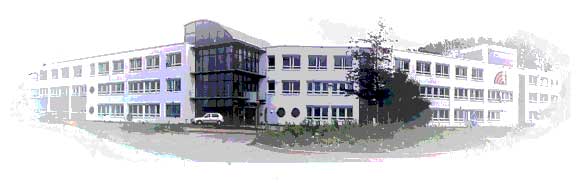
Welcome to the Homepage of IMST The IMST GmbH is located in Germany. Headquarters is in Kamp-Lintfort, approx. 20 km northwest of Duisburg. IMST was founded in 1992. Already in January 1995, the new IMST headquarters, with 4,500 sqm of office space and special laboratories, was completed and the staff of 70 employees moved into this modern and well-equipped building in Kamp-Lintfort, Germany. Since 1993, however a large part of the work at the IMST is dedicated to innovative research for industrial applications, and the scientists of the IMST have participated in various research projects funded by the German Government, the European Community or regional authorities. Today, IMST is a modern service provider for research and development as well as an independent appraiser. The institute has its own in-house near and far field antenna measurement capabilities, an EMC measurement chamber, a hybrid technology laboratory for RF, microwave and millimeterwave production, and highly specialized laboratories for mobile radio and microwave measurements. Today, more than 80 highly qualified employees and a number of guests and exchange scientists are performing research and development work at the institute. The following diagram gives a comprehensive overview about the main objective of the institute as well as of the key-personnel.
The institute is an active member in many national and international committees and standard organisations, like the European Telecommunications Standards Institute - ETSITM and is co-undersignee of the Memorandum of Understanding for the new digital communication standard TETRA - Trans European Trunked Radio. The knowledge and expertise of the engineering staff in state-of-the-art technology is maintained in part with our intensive involvement in national and international R&D programs (i.e. ESPRIT, ACTS, Brite-Euram or the Federal Ministry of Education, Science, Research and Technology - BMBF). The institute comprises four major departments
Microwave Communication Techniques The Microwave Communication Department of the IMST has comprehensive experience in microwave circuit design and measurements. The typical application frequencies range from 1 GHz to 100 GHz, where monolithic microwave integrated circuits (MMICs), hybrids, Multi Chip Modules (MCMs) and multi-layer applications are supported. This department is divided into four technical groups which form teams, also with other departments of the IMST, on projects in the following technical fields:
There are currently 21 scientists and 2 technicians working in four technical groups. This collection of experts covers experience in the fields of MMIC design, electromagnetic field simulation, packaging, assembly and interconnection techniques, nonlinear modeling, state-of-the-art measurement techniques, hybrid technology processes and innovative design and software development. The class of projects ranges from pure long term research over application oriented work in industrial projects even to product development. The complexity level ranges from simplest single elements over single function blocks to complex transmit/receive (Tx/Rx) modules. Even complex packaging problems are tackled and solved. Various advanced software simulation and extraction tools, for time- and frequency-domain simulation/extraction, are available and extensively utilized. Nonlinear and linear modeling is being conducted in order to support the simulation for designing complex circuits. State-of-the-art measurement labs, powerful computers and experience in large number of MMIC-foundries round off the service capabilities of the IMSTs Microwave Communication Department.
The Antenna Engineering Department is working interdisciplinary in the commercially oriented area of mobile radio applications, as well as in the market of microwave communication technology, which is more industrially oriented. The institute offers the following services in the area of antenna techniques:
The department has one of the most modern antenna measuring chambers (dimensions: 12m x 8m x 6m) including a far field and a near field measurement equipment. Furthermore, for large antenna constructions, it has a 100 m free space measurement setup.
Mobile Radio and Satellite Communication Systems This department forms an integral part of the name of the institute and, therefore, its significance for the institute cannot be overestimated. The complete spectrum of modern developments in the field of mobile, digital radio communication technology is concentrated in this department. Mobile radio communication at the institute means technical excellence in, for instance, the following standardized systems:
The know-how provided by this department reaches from system design, cellular network planing, over RF and digital hardware development to indoor house and outdoor measurements in cellular mobile networks. In the area of hardware development a work up to the prototype and small series production is provided.
Electromagnetic Compatibility and Environmental Aspects (EMCEA) In order to perform EMC testing in accordance with the applicable standards, IMST has comprehensive test facilities. The anechoic chamber with hybrid absorber lining, allows measurement distances of 3 m, 5 m and 7 m for radiated emission (turntable: Æ =2 m, 2000 kg) in a frequency range from 30 MHz up to 40 GHz. In addition a screened room (7 m ´ 3 m ´ 3 m) is used for conducted and ESD tests. Radiated emissions can be measured up to 26.5 GHz, immunity tests up to 4 GHz are possible. Most of the EMC standards from EN, IEC, ANSI, FCC and ETSITM can be measured at IMST. Various CAE tools as FDTD, MoM, FEM and circuit simulators are used to influence designs. They allow complete assessment of all potential electromagnetic interactions from circuit board level up to system aspects. The tools are implemented on workstation computers and a minisupercomputer. The Dosimetric Assessment System DASY (10 MHz - 6 GHz) is used for assessing SAR-distributions in tissue simulating liquids. Additionally, electromagnetic near-fields of communication equipment can be measured. The system is used for compliance tests of mobile telecommunication equipment and sensor systems with respect to exposure limits defined in various national and international standards. A 6-axis robot controlled by a computer is used to automatically scan spatial grids. A group of biologists in this department, enables interdisciplinary projects in the EMC technology with environmental aspects.
|
|
Send mail to webmaster@imst.de
with questions or comments about this web site.
|
 Dr. Peter Waldow